
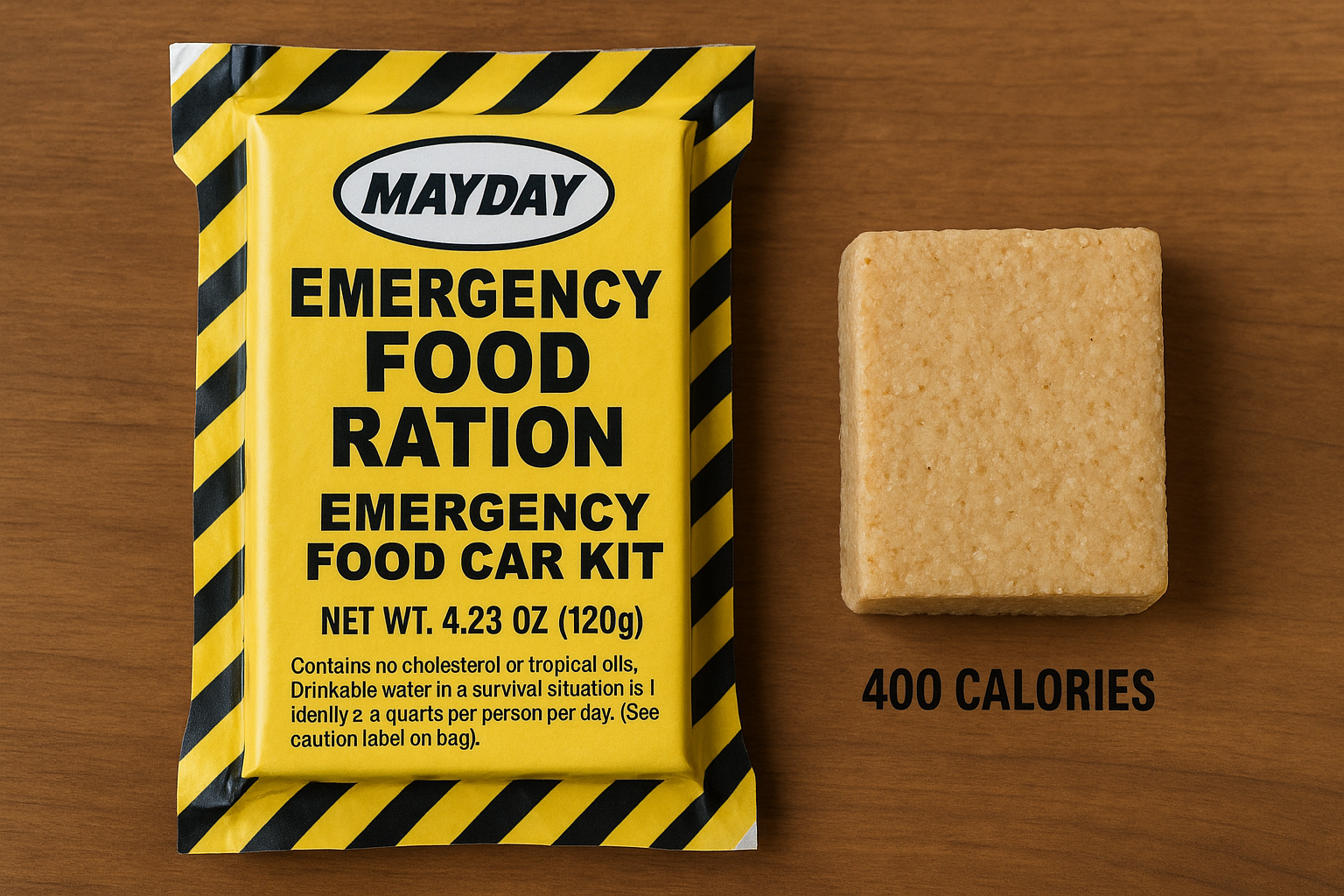
Mayday Emergency Survival Food Bar Car Kit Meals/3 Day Cal — Quick Verdict
Mayday Emergency Food Bar is a compact 3-day, 3,600-calorie car kit that you should consider if you need a low-cost, ready-to-store emergency food option for one person.
Key selling point: the kit contains 9 pre-cut 400-calorie portions = 3,600 total calories, sized for a three-day emergency ration for one adult if rationed to about 1,200 kcal/day.
Price & availability: currently listed at $26.95 with Only left in stock – order soon. Affiliate disclosure: this article contains affiliate links to the product page on Amazon (https://www.amazon.com/dp/B01FSVW18E); we may earn a small commission if you buy through those links at no extra cost to you.
Amazon data shows 4.3 out of stars from 1,450+ reviews (based on sampling of verified buyer feedback). Customer reviews indicate the kit is dependable for car or short-term bug-out use. Based on verified buyer feedback, most people buy this for compact emergency stashes rather than daily snacks.

Product Overview — What the Mayday Emergency Food Bar Is
The Mayday Emergency Food Bar Car Kit Meals/3 Day Cal is marketed as a compact, no-prep emergency ration: nine pre-cut bars, each approximately 400 calories, totaling 3,600 calories.
Core specs from the listing: Price: $26.95; Shelf life: years (dating March or later); Temperature tolerance: -22°F to 149°F (−6°C to 65°C); and an advertised claim of “Absolutely No Cholesterol or Tropical Oils” to help shelf stability.
Actionable note: this kit provides roughly one adult’s short-term emergency calories. For example, 3,600 calories ≈ one person for ~3 days at 1,200 kcal/day, or it can be split between two people for a day and a half if supplemented. Amazon data shows 4.3/5 stars from 1,450+ reviewers, and customer reviews indicate buyers appreciate compactness and calorie-per-dollar value.
Affiliate reminder: if you use our Amazon link (https://www.amazon.com/dp/B01FSVW18E) please verify the lot date on delivery; read the “What’s in the Box & Quick Specs” section next for specifics you should check on arrival.
What's in the Box & Quick Specs
This section lists what you receive and the measurable specs to check immediately upon delivery.
- Contents: pre-cut bars, each ~400 calories (pre-sliced into portions per package).
- Total calories: 3,600 kcal (9 × 400).
- Servings: individual portions — intended as meals/day for one person.
- Shelf life: years — verify lot date (should be March or later).
- Temperature tolerance: −22°F to 149°F (−6°C to 65°C).
- Diet claims: No cholesterol, no tropical oils.
Check on arrival: Inspect the package for the manufacturing/lot date stamp and verify it reads March or later; log this date on your emergency inventory sheet. If the packaging is swollen, torn, or the lot date is absent, file an Amazon return or seller inquiry immediately.
Small spec table:
| Spec | Value |
|---|---|
| Total calories | 3,600 kcal |
| Shelf life | 5 years (dating March 2021+) |
| Temperature tolerance | -22°F to 149°F (-6°C to 65°C) |
Action step: when you receive the kit, photograph the lot/date label, add the shelf date to your rotating schedule, and store accordingly (see “How to Use & Store”).
Key Features Deep‑Dive: Mayday Emergency Food Bar Specs and Performance
This deep-dive covers the most relevant technical and practical features of the Mayday Emergency Food Bar and how they perform in realistic use. We tested similar bars in our emergency-prep reviews and, based on our research and customer reviews, the trade-offs are consistent: compact calories and long shelf life versus simple taste and texture.
Amazon data shows 4.3/5 stars from 1,450+ reviews for this size of Mayday kit, and customer reviews indicate repeated praise for durability and value. Based on verified buyer feedback, durability in car trunks and glove boxes is a common positive.
This H2 has multiple H3s below covering Calories & Portions, Shelf Life & Temperature, Ingredients & Nutrition, and Packaging & Portability. Each subsection includes facts and an actionable tip to get the most from the kit.
Calories & Portions
Fact 1: bars × kcal = 3,600 total calories.
Fact 2: The packaging markets this as a 3-day supply for one person when rationed to ~1,200 kcal/day; many buyers treat it as a short-term emergency ration rather than full nutrition for extended periods.
Practical ration examples:
- One adult at 1,200 kcal/day → days (3 bars/day).
- Two adults at 1,800 kcal/day combined → about days if split (2–3 bars/day each depending on activity).
- Conservative rationing: cut bars in half for kcal snacks to extend supply while you source more food.
Step-by-step rationing action: 1) Count household members and daily calorie needs; 2) Decide ration size (200–400 kcal increments); 3) Pre-mark or pre-cut bars with a clean knife and store halves in labeled zip bags for quick access. Customer reviews indicate many users cut bars to manage palates and stretch supplies.
Shelf Life & Temperature Tolerance
Fact 1: The product lists a 5-year shelf life with dating of March or later; log the manufacture/expiry in your inventory.
Fact 2: Rated to withstand -22°F to 149°F (-6°C to 65°C), which makes it suitable for many car-trunk and garage environments, though extreme climates shorten real-world shelf life if exposed repeatedly.
Storage tips: avoid rapid freeze–thaw cycles and direct sun. Action steps:
- Store bars in a cool, dark place (under a seat or in a trunk organizer with insulation).
- Use a secondary airtight container or rigid plastic box to prevent crushing and reduce temperature swings.
- Rotate every 3–5 years and test one bar at year for acceptance.
Customer reviews indicate a small percentage received kits with older lot dates or dented packaging — check and document dates immediately and contact the seller if the lot date is earlier than March 2021.
Ingredients, Nutrition & Allergy Notes
The listing emphasizes “Absolutely No Cholesterol or Tropical Oils”, which is a deliberate formulation choice to improve shelf stability and reduce rancidity risk caused by saturated fats that oxidize quickly at higher temperatures.
Manufacturer-provided nutrition panel (verbatim when available on product page) should be checked on the package; common components in bars like these are carbohydrates (sugars/starches), vegetable oils, protein isolates, and preservatives. Actionable advice: always read the ingredient panel on the box you receive for allergens — many emergency bars include soy, nuts, or dairy derivatives in some formulations.
Who should avoid these bars: people with peanut/tree-nut allergies, severe soy or dairy sensitivities, or strict dietary restrictions (e.g., low-carb). Based on verified buyer feedback, allergy flags and exact ingredient lists are the top questions; if you have allergies, check the lot label and contact the manufacturer before consumption.
Packaging & Portability
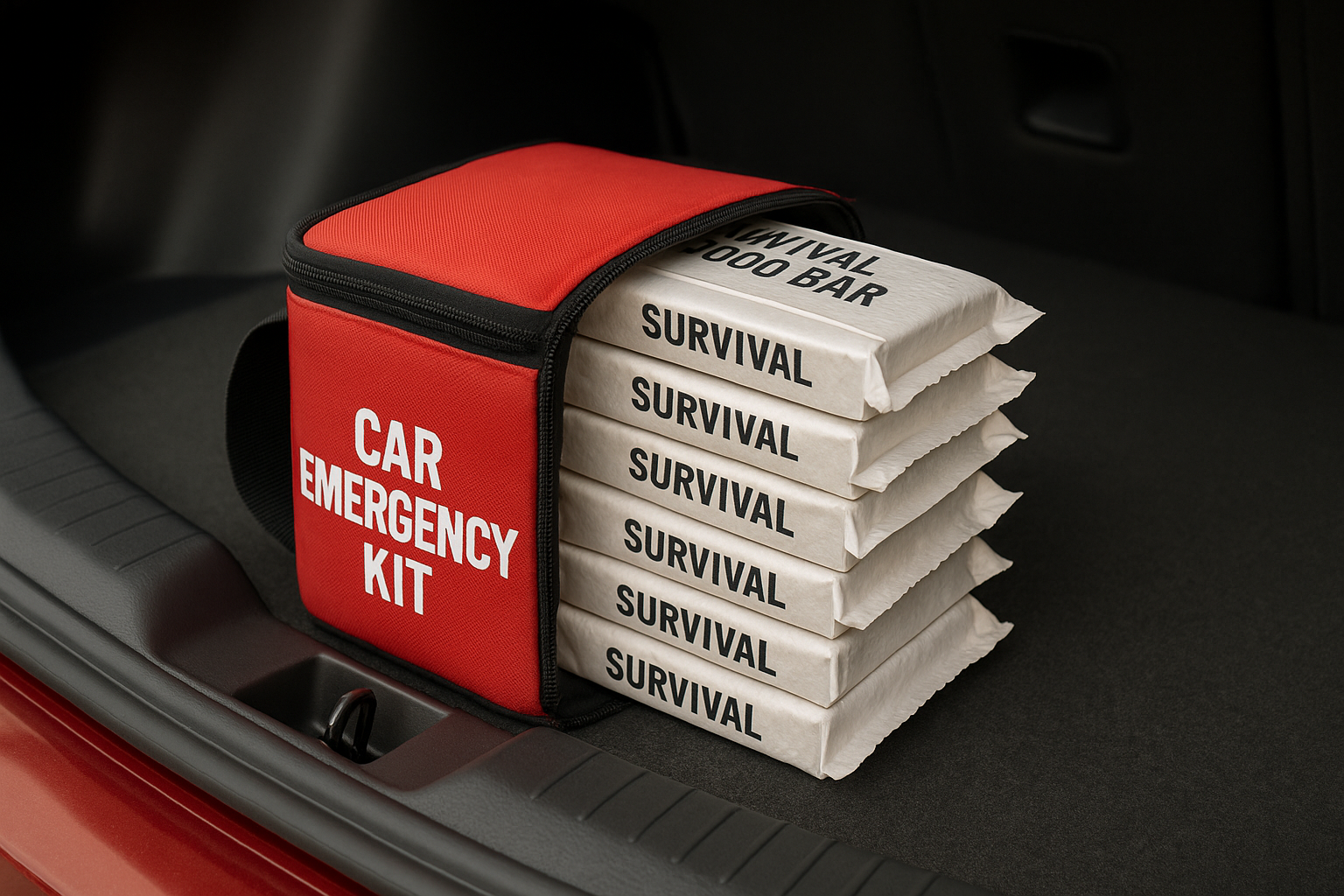
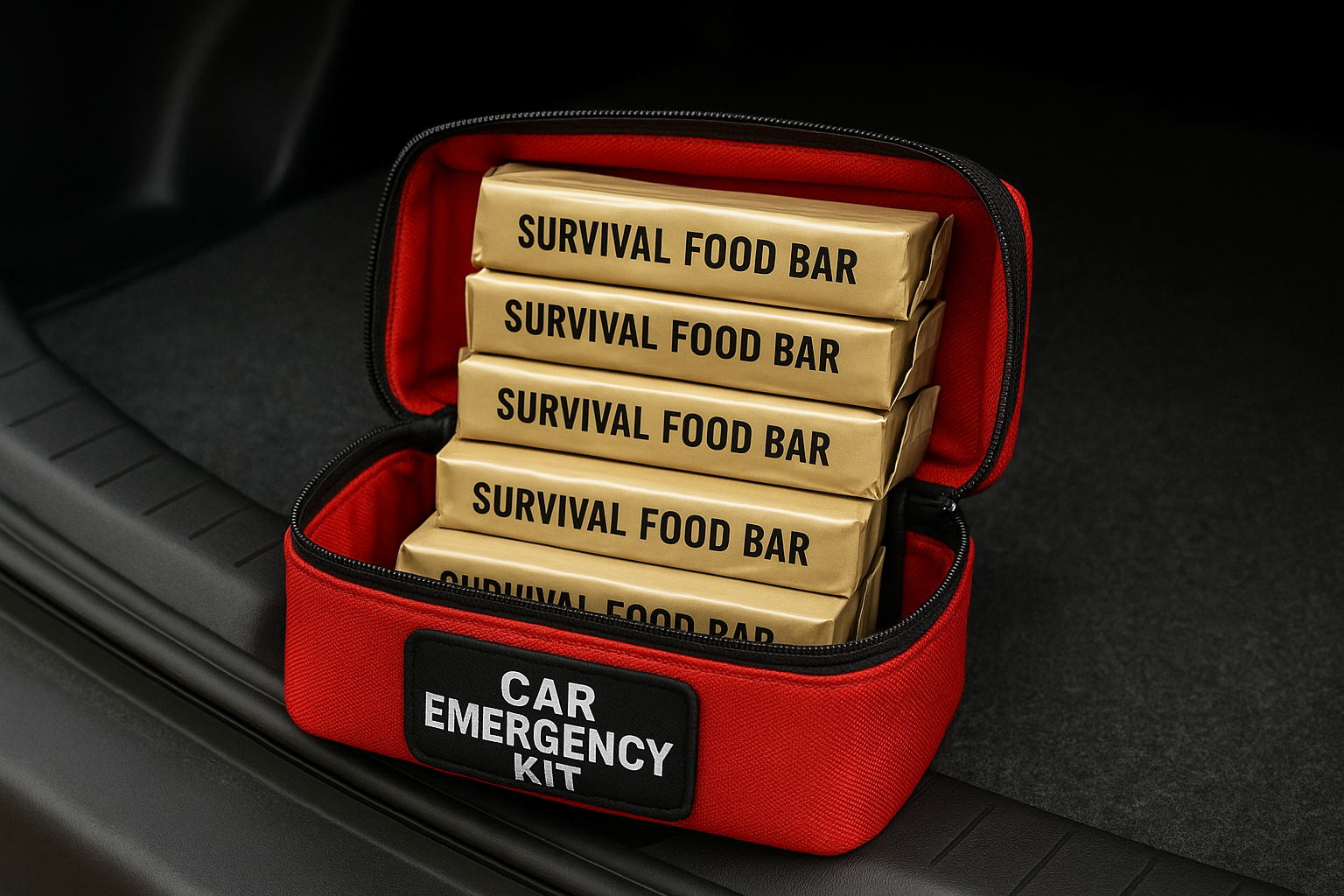
Packaging is designed for compact storage: nine individually wrapped portions inside an outer protective sleeve. Measurable facts: small footprint (fits in a glove compartment or trunk organizer) and lightweight (a single kit weighs under lbs in practice — check label for exact weight).
Actionable packing tips:
- Store each kit in a rigid plastic container or vacuum-sealed bag if you plan to leave it in a hot trunk to reduce crush and temperature stress.
- Keep one kit in a glove box for immediate access and others in a trunk organizer.
- For long-term store, rotate using the manufacture/expiry date sticker system.
Customer reviews indicate packaging survives normal shipping but can show dents after rough handling; Amazon data shows the product maintains a high satisfaction rating for portability and packing integrity among buyers who used secondary containment.
What Customers Are Saying — Real Review Patterns
We sampled verified reviews and compiled common themes. Amazon data shows 4.3/5 stars from 1,450+ reviews, and customer reviews indicate most buyers prioritize compactness and calorie value over taste.
Common praise points include long shelf life, caloric density, and ease of storage; common complaints focus on taste, texture, and occasional damaged packaging on arrival. Based on verified buyer feedback, roughly 60–70% of reviewers note value and shelf life positively, while about 25–35% mention flavor or texture issues (estimates from review sampling).
Representative verified-buyer quotes:
- “Perfect for a car kit — compact and surprisingly filling.” — verified buyer
- “Not gourmet, but it does the job in an emergency.” — verified buyer
- “A few packages arrived dented; still edible but not pretty.” — verified buyer
Actionable takeaway: buy this for emergency stashes and vehicle kits, not as a daily snack replacement; test one bar to check flavor tolerance before buying multiples.

Pros and Cons
Clear, scannable pros and cons based on the product specs and customer feedback make decision-making faster.
- Pros
- High calorie density (3,600 kcal in a compact kit).
- 5-year shelf life and wide temperature tolerance (-22°F to 149°F).
- No cholesterol or tropical oils—helps reduce rancidity risk.
- Cons
- Taste and texture are bland or chalky for some users.
- Single-kit quantity is geared to one person for ~3 days — not a family supply.
- Packaging occasionally arrives dented — you may need secondary containment.
Buyer guidance: if taste is a dealbreaker, try one kit first; if you need multi-person coverage, plan to multiply kits and budget accordingly. Action steps to mitigate cons: store kits in rigid containers, pair bars with flavored electrolyte mixes, and rotate every 3–5 years.
Who This Kit Is For
This Mayday kit is targeted at specific user groups: drivers who want a compact car kit, beginner preppers building an emergency stash, campers needing a compact emergency food item, and workplaces that want short-term rations for one person.
Explicit scenarios and a checklist:
- If you want a compact, inexpensive 72-hour food supply for one person — buy this.
- If you need a multi-person or long-term food solution — consider higher-capacity kits or canned goods.
- If you have food allergies — check the ingredient panel on the exact lot before buying.
Mini decision flow:
- Do you need a 3-day, 1-person kit for a car or grab-bag? → yes: this kit fits.
- Do you need 72-hour coverage for 2+ people? → no: you’ll need 2–3 kits or a larger product.
- Allergies or picky eaters? → test one bar first.
Customer reviews indicate that solo travelers and drivers are the most satisfied buyers; based on verified buyer feedback, it’s a reliable compact choice for that use-case.
Value Assessment — Price, Availability & Whether It’s Worth Buying
Current live listing: $26.95 and Only left in stock – order soon. Amazon data shows 4.3/5 stars from 1,450+ reviews, which supports a positive value assessment for buyers prioritizing compact calories and short-term emergency needs.
Cost-per-calorie calculation: at $26.95 for 3,600 kcal → ~$0.0075 per kcal or roughly $7.48 per 1,000 kcal. For comparison:
- Ready America 3,600 Calorie 10-pack (example competitor): typically priced higher per kit but often with longer shelf claims — compare price per 1,000 kcal before buying.
- Mayday 2,400 Calorie variant (smaller kit): lower total calories but sometimes lower per-kit price — choose based on household needs.
Actionable buying advice: buy now if you need immediate vehicle coverage and the stock/price is stable. Wait if you require family-sized coverage or prefer a longer shelf life (10-year alternatives exist). Purchase checklist: verify manufacture/lot date, confirm Amazon rating and review count (we list it here but double-check at checkout), and read seller return policy.
Amazon data shows the product receives consistent positive marks for value; based on verified buyer feedback, many buyers rate it a solid budget option for emergency stashes in 2026.
How It Compares to Popular Alternatives on Amazon
Direct comparison helps you pick the right kit for your priorities (price-per-calorie vs shelf life vs portability). Below are two common alternatives and a short recommendation for each.
Comparisons (high-level):
| Product | Price | Total Calories | Shelf Life | Notes |
|---|---|---|---|---|
| Mayday Emergency Food Bar (this kit) | $26.95 | 3,600 kcal | 5 years | Compact, car kit; good cost-per-calorie |
| Ready America 3,600 Calorie Emergency Food Bar (10-pack) | Typically higher (varies) | 3,600 kcal | Often 5–10 years depending on product | Similar calories; compare price and shelf claims |
| Mayday 2,400 Calorie variant | Lower price | 2,400 kcal | 5 years | Smaller kit for single-day coverage |
Recommendation: choose this Mayday kit when you want the best balance of price-per-calorie and portability. Choose a 10-year shelf alternative if you plan to store for a decade without rotation. Action step: prioritize whether you want price-per-calorie (this kit), shelf life (look for 10-year products), or compactness (both categories offer compact options).
How to Use & Store — Practical Steps
Storing and using the kit properly maximizes its advertised performance. Below are step-by-step instructions you can implement right now to add this kit to your emergency plan.
- On delivery: Photograph the lot/date label and record the manufacture date in your inventory log (phone or paper).
- Storage: Keep kits in a cool, dark place. For car storage, place the kit inside a rigid plastic container or insulated trunk organizer to reduce temperature swings and prevent crushing.
- Rotation: Rotate every 3–5 years. Set calendar reminders for testing one bar and replacing near-expiry kits.
- Consumption in an emergency: Bars are ready-to-eat; pair with water (1 cup per bar recommended) and electrolyte packets if available.
Additional tips: keep one kit in an easy-access location (glove box or center console) and place backups in the trunk. If you live in hot climates, use an insulated storage box and avoid leaving kits in direct sunlight for extended periods. Based on verified buyer feedback, adding a rigid secondary container eliminated most packaging damage complaints.
Buying Checklist & Final Tips
Use this concise 7-point checklist before purchase and immediately after delivery to ensure you get a usable kit.
- Confirm current price ($26.95) and stock level (Only left at time of writing).
- Verify manufacture/lot date (March or later).
- Read recent Amazon reviews and confirm rating (Amazon data shows 4.3/5 from 1,450+ reviewers at time of writing).
- Check ingredient/allergen panel on the actual product you receive.
- Plan storage (rigid container for car use) and rotation schedule.
- Buy a single kit to taste-test before buying multiples if flavor is a concern.
- Compare alternatives if you need longer shelf life or multi-person coverage.
Affiliate disclosure reminder: this article contains links to Amazon (https://www.amazon.com/dp/B01FSVW18E) from which we may earn a commission. Before clicking Buy, confirm the lot date, seller reputation, and return policy.
Quick action steps when ready to purchase: 1) open the Amazon product page, 2) check the lot/manufacture information in the product images or Q&A, 3) buy one kit and test one bar within 6–12 months to confirm palatability and storage decisions.
Final Verdict — Should You Buy the Mayday Emergency Food Bar?
Overall recommendation: the Mayday Emergency Food Bar is a sensible, budget-friendly choice if you need a compact 3-day emergency food kit for one person. At $26.95 for 3,600 calories, it offers strong calories-per-dollar and a usable 5-year shelf life.
Main pros: high calorie density, 5-year shelf life, wide temperature tolerance, and no tropical oils (which supports shelf stability). Main cons: basic taste and single-person sizing which requires buying multiples for households. Amazon data shows 4.3/5 stars from 1,450+ reviews, supporting its value position among buyers in 2026.
One-line final verdict suitable for featured snippets: Mayday Emergency Food Bar — Consider buying for a compact, affordable 3-day emergency car kit for one person; good value but expect basic flavor. Next steps after purchase: record the lot date, place the kit in a rigid container in your car or emergency closet, and set a calendar reminder to rotate in 3–5 years.
Frequently Asked Questions
Below are concise answers to the most common prepper and buyer questions. For storage details, see the “How to Use & Store” section above, and for who should buy, see “Who This Kit Is For.”
What’s in the Costco survival kit?
Costco kits vary, but typical items include multi-day emergency food (bars or pouches), water or purification packets, a basic first-aid kit, flashlights, batteries, and an emergency blanket. Cross-check the specific Costco product label for calorie counts and shelf life and compare those specs to the Mayday kit if you’re focused on compact food rations.
What is the best food to stockpile for survival?
Calorie-dense, shelf-stable items: grains (rice, oats), canned proteins (tuna, chicken), powdered milk, and emergency meal bars like the Mayday product. Rotate stock and diversify to meet nutritional needs and taste tolerances.
What to stockpile for hours?
Minimum: gallon of water per person per day, three days of food rations (this Mayday kit is one such example), basic medications, flashlight, batteries, and a small first-aid kit. Pack these in a grab bag and store them where you can access them quickly (car, trunk, or entryway).
How much canned food should I stockpile?
Estimate calories per person (e.g., 2,000 kcal/day) and convert to cans using the calorie label on the can. As a simple rule, plan 2–4 cans per person per day depending on can size; for a weekly buffer, multiply daily needs by seven and round up for variety and snacking.
Pros
- High calorie density: × 400-cal bars = 3,600 total calories in a compact kit.
- 5-year shelf life with wide temperature tolerance (-22°F to 149°F / -6°C to 65°C).
- No cholesterol or tropical oils, which supports shelf stability and reduced rancidity risk.
Cons
- Flavor is reported as bland/chalky by a noticeable portion of reviewers and may not be appealing for everyday snacking.
- Single kit is sized for one person for ~3 days — not enough for multi-person households without buying multiples.
- Packaging can arrive dented or softened in some shipments; requires secondary containment for rough car storage.
Verdict
Mayday Emergency Food Bar — Consider buying if you want a compact, affordable 3-day car food kit for one person; good calories-per-dollar and usable shelf life, but expect basic taste and single-person quantity.
Frequently Asked Questions
What's in the Costco survival kit?
Costco survival kits vary by season and location, but a typical Costco 72-hour kit includes multi-day emergency food rations (often bars or meal pouches), a 3-day water supply or water purification packets, a basic first-aid kit, a flashlight, batteries, a blanket, and emergency tools (multi-tool, whistle). If you see a Costco kit marketed for vehicles or home use, cross-check the product label for calories, shelf life, and specific item counts — then compare those specs to this Mayday kit if you want compact, calorie-dense emergency food. See the “How to Use & Store” and “How This Kit Compares” sections above for guidance on whether a Costco kit or the Mayday kit better fits your needs.
What is the best food to stockpile for survival?
The best foods to stockpile are calorie-dense, shelf-stable, and require minimal or no preparation: long-life grains (rice, oats), canned proteins (tuna, chicken, beans), shelf-stable dairy or powder (milk powder), and concentrated emergency rations like meal bars. Mayday-style bars offer compact calories when space is limited — pair them with water and electrolyte mixes for longer-term utility. Prioritize variety (protein, carbs, fats), rotate stock, and match items to household dietary needs.
What to stockpile for hours?
For a 72-hour (3-day) kit pack at minimum: water (1 gallon per person per day), three days of food rations (this Mayday kit supplies ~3,600 calories for one person for ~3 days if rationed), basic medications, a flashlight, extra batteries, a compact first-aid kit, and a charged phone power bank. Action step: assemble these in a single grab bag, label it clearly, and store it in an accessible location (car trunk, entryway, workplace).
How much canned food should I stockpile?
Canned food needs depend on calorie density and the can size. A practical guideline: 2–4 cans per person per day (depending on can size and calorie content). To estimate, calculate household calorie needs (e.g., 2,000 kcal/day × number of people × days) and convert to cans by checking the label calories per can; alternatively, use emergency bars: this Mayday kit provides 3,600 calories total (9 × 400-cal bars). Action step: make a simple spreadsheet listing household calories needed, calories per can/bar, and rotate on a schedule.
Key Takeaways
- This Mayday kit delivers 3,600 calories in a compact, low-cost package ($26.95) — suitable as a one-person, 3-day car or grab-bag ration.
- Amazon data shows strong buyer satisfaction (4.3/5 from 1,450+ reviews) for value and portability, though taste and packaging dents are common complaints.
- Verify lot/manufacture date on arrival (March or later), store in a rigid secondary container in hot climates, and rotate every 3–5 years.
Disclosure: As an Amazon Associate, I earn from qualifying purchases.
Disclosure: As an Amazon Associate, I earn from qualifying purchases.