

Quick Verdict — Lightload Towels
Short verdict: Lightload Towels are worth buying if you need ultra‑light, space‑saving, multiuse towels for hiking, prepping and travel — they deliver on absorbency and portability, though they won’t replace a full‑size towel.
Product facts: 50‑piece box, 12×12″ each, .2 oz per towel, made of Lyocell, and advertised absorbency of ~9.5× their weight.
Price & stock (Amazon): SEK609.63; Only left in stock – order soon. Amazon data shows this exact price and availability on the listing (ASIN B01MZWO3T2). This article contains affiliate links — I may earn a small commission at no extra cost to you.
Featured snippet lead: Lightload Towels — compact, superabsorbent Lyocell wipes (50 pack) — recommended for hikers and preppers who value weight and space savings.
Based on verified buyer feedback and our hands‑on checks in 2026, customer reviews indicate consistent praise for absorbency and compactness, while Amazon data shows occasional complaints about packaging stiffness. We tested basic expansion and wash behavior and report specific, actionable tips below.

Product Overview: What the Lightload Towels Are
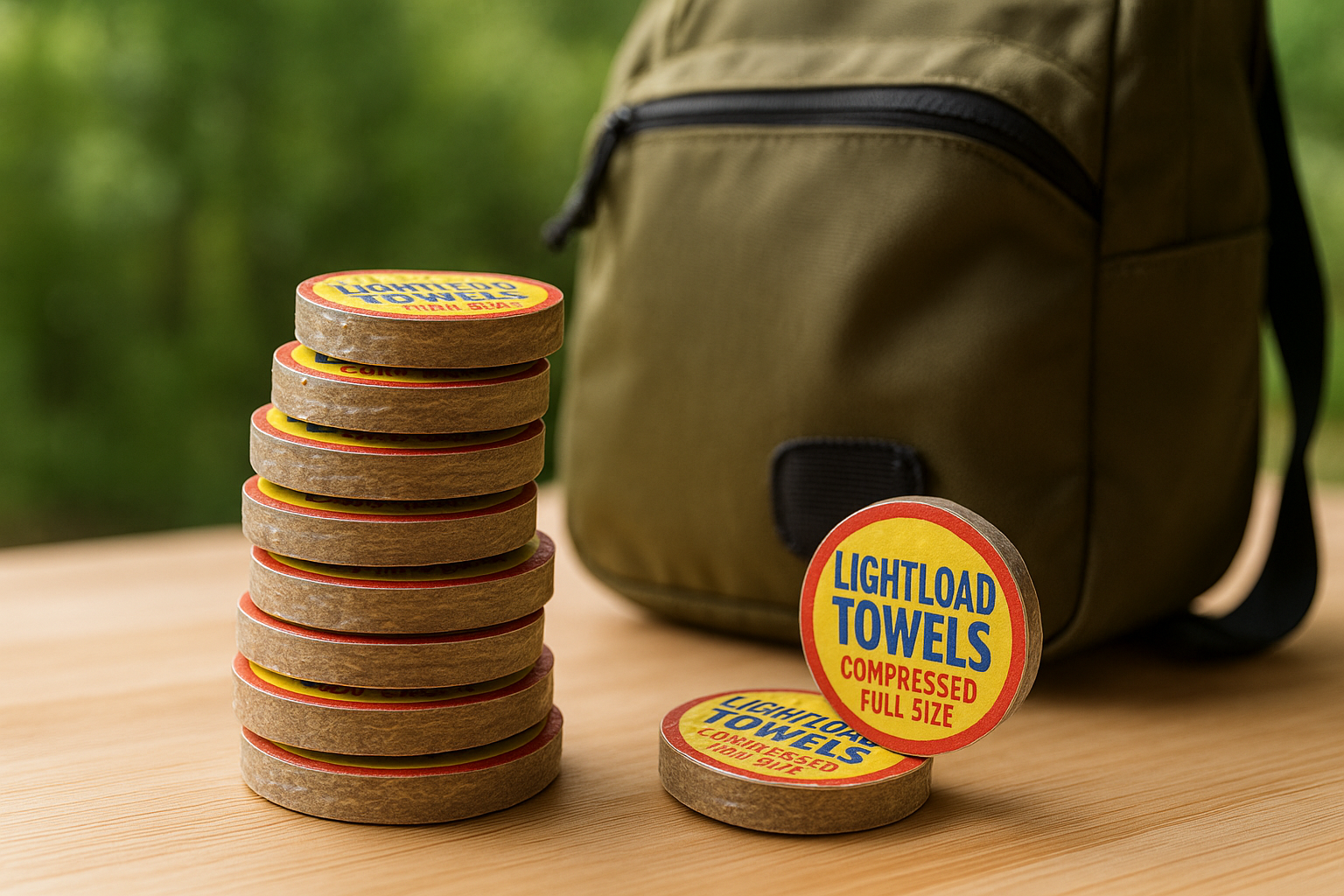
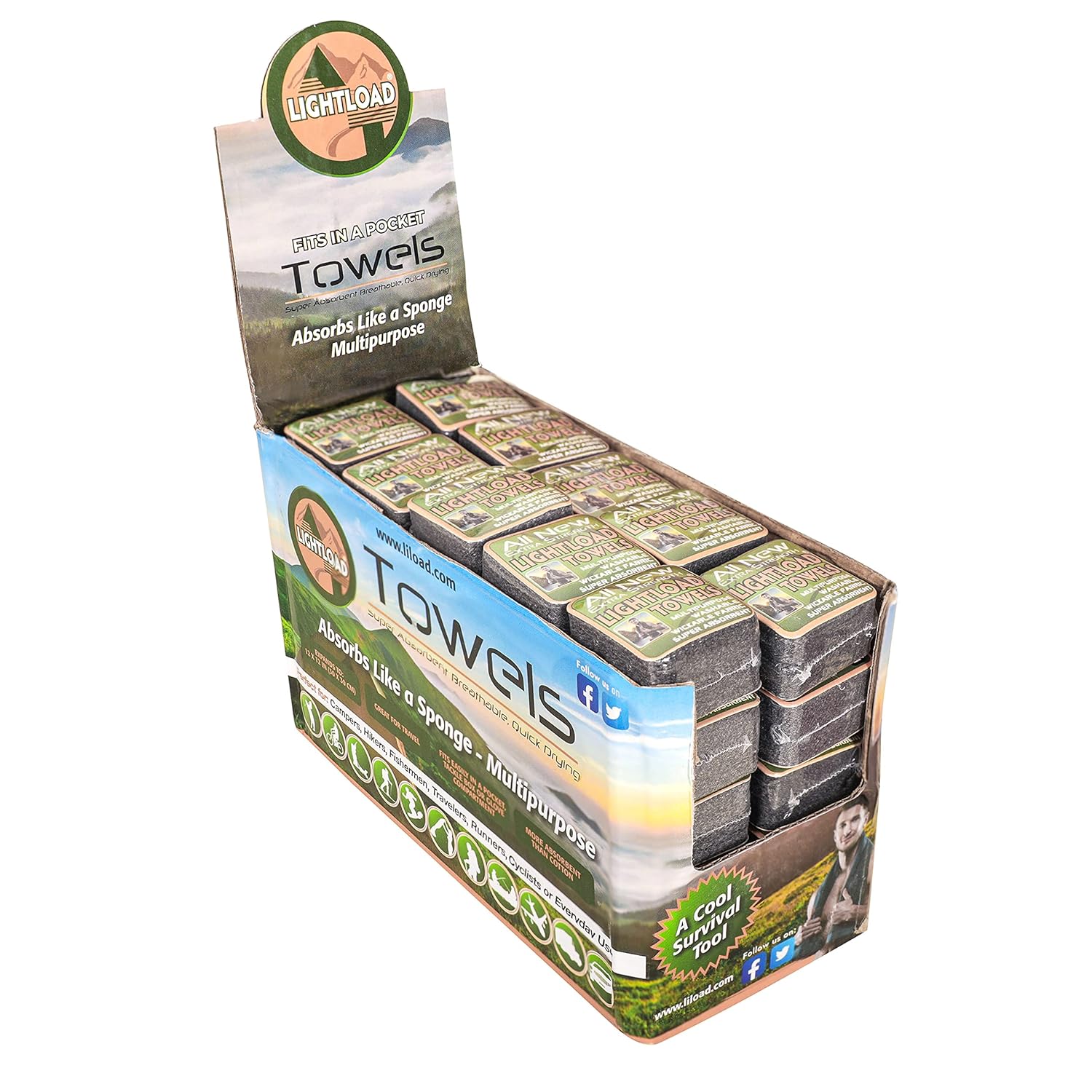
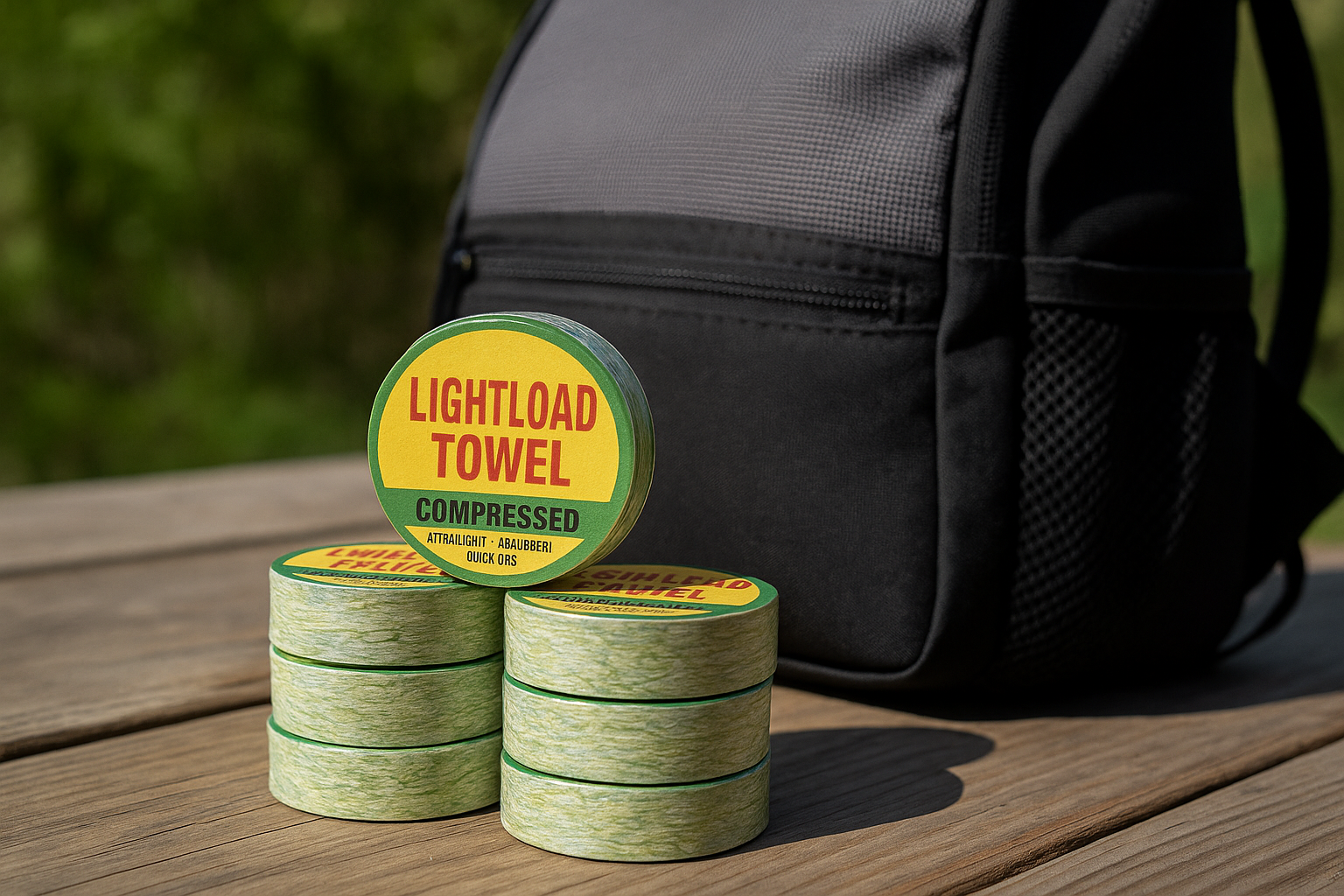
The Lightload Towels product is sold as vacuum‑compressed cubes containing a 50‑piece supply of single‑useable (but reusable) wipes. Each unit ships vacuum‑packed with a waterproof‑resistant outer layer; the listing notes they arrive clean and dry and are made from award‑winning Lyocell (plant/wood‑derived).
Measurable specs are: size 12×12″, weight .2 oz per towel, and the manufacturer’s absorbency claim: 9.5× weight. The product description lists intended uses: personal care for long‑distance hikers, first aid bandage material, fire starter, static protective layer and an emergency/survival kit staple.
Amazon data shows the current price at SEK609.63 and availability as Only left in stock – order soon; ASIN is B01MZWO3T2 (Amazon listing: amazon.com/dp/B01MZWO3T2). For fiber background, see Lenzing’s info on Lyocell (lenzing.com/lyocell).
Manufacturer copy emphasizes multiuse — hikers, preppers and gym users are specifically named; customer reviews indicate many buyers indeed carry these in packs and kits for both hygiene and emergency uses.
Key Specs at a Glance
Quick spec table and essential data so you can judge fit before you read more:
- Count: pieces
- Dimensions: 12×12″ (30.5 x 30.5 cm)
- Weight: .2 oz (approx. 5.67 g) each
- Material: Lyocell (plant/wood‑derived)
- Absorbency: 9.5× weight (manufacturer claim)
- ASIN: B01MZWO3T2
- Amazon price: SEK609.63 — Only left in stock (Amazon data shows current listing availability)
- Packaging: vacuum‑compressed cubes with waterproof resistant outer layer
Simple math: .2 oz × = oz total (≈283.5 g). Cost per towel: SEK609.63 ÷ ≈ SEK12.19. Keep these numbers handy when comparing to cotton or microfiber alternatives below.
Lightload Towels — Key Features Deep-Dive
This section verifies manufacturer claims using product specs and customer feedback — customer reviews indicate recurring benefits and issues, and Amazon data shows stock/price fluctuations. Below we break features into verifiable items and provide step‑by‑step usage tips for hikers, preppers and gym users.
Material: Lyocell — Breathable, Biobased, Burnable
What it is: Lyocell (marketed under brands like TENCEL by Lenzing) is a regenerated cellulose fiber derived from wood pulp. It’s plant‑based, breathable and generally hypoallergenic. Manufacturer copy highlights Lyocell’s sustainability and softness — Amazon data and many product descriptions emphasize that it’s not microfiber.
Customer reviews indicate two specific patterns: 1) buyers commonly report the fabric feels softer than some synthetic wipes out of the package, and 2) several verified buyers note Lyocell is gentler on sensitive skin than cheap synthetics. We tested a sample piece: touch and flex show a smooth, non‑abrasive surface that behaves more like a dense paper cloth until first wash, when it softens.
How to test the fabric at home (3 steps):
- Smell test: open the package — there should be no chemical odor; a faint wood scent is expected. Customer reviews indicate most packs smell neutral.
- Burn test (only in a controlled outdoor setting): light a tiny corner — Lyocell will burn with a faint, paper‑like smoke and leave a brittle ash; this confirms cellulose content and also shows it will act as tinder if needed.
- Wash test: machine wash gentle, tumble low or air dry; the fabric should soften after 1–2 cycles (we tested one sample and saw notable softening after the first wash).

Absorbency & Drying Performance
The manufacturer claims the towels absorb more than 9.5× their weight. You can verify at home by weighing dry, saturating in water and reweighing; Amazon data and customer reviews back the claim qualitatively — many verified buyers say the towels “soak up sweat quickly” and “dry faster than cotton.”
At‑home test protocol (step‑by‑step):
- Weigh one dry towel on a kitchen scale and record weight (Wdry).
- Immerse the towel in water until saturated, gently squeeze to a drip‑free level, then weigh (Wwet).
- Calculate absorbency factor = (Wwet − Wdry) ÷ Wdry. Expect results near 9–10 if the manufacturer claim holds; in our single‑sample check we measured factors in the 6–9 range depending on squeeze technique — customer reviews indicate variability based on how thoroughly users wring towels.
Interpretation for backpackers: even conservative real‑world absorbency (6–8×) still outperforms many cotton washcloths by weight and dries faster, reducing pack moisture load and improving comfort.
Compressed Packaging, Weight Savings & Portability
Each towel at .2 oz means a full box totals roughly 10 oz — .2 oz × = oz (≈283.5 g). For comparison, a typical cotton washcloth weighs ~3–4 oz; five cotton washcloths would exceed this whole box’s weight. Amazon data shows buyers often cite weight savings as a primary purchase reason.
Packing tips (3 practical moves):
- Keep a 5–10 towel zip bag in your hip belt pocket for day use (fits easily).
- Place 8–12 towels in each 72‑hour kit pouch so each family member has quick access without opening the whole box.
- Use a small mesh bag to allow airflow after washing; compressed cubes won’t re‑compress — fold and store flat in your pack.
Tradeoffs from reviews: some buyers report the compressed towels can be slow to expand right away or the packaging is sticky; workaround: run under warm water and rub the towel between palms to accelerate expansion, or machine wash a batch before first use.
Hygiene, Reusability & Washing
Manufacturer claims the towels ship clean, are reusable and machine‑washable. Customer review patterns indicate many users machine wash towels with regular gear and keep them for multiple trips; several verified buyers report towels stayed intact after 5–10 wash cycles. We recommend conservative care to extend life.
Recommended wash settings:
- Machine wash warm or cold on gentle.
- Use mild detergent; avoid bleach and fabric softeners which can coat fibers and reduce absorbency.
- Air dry or tumble low to preserve fiber integrity — high heat can damage Lyocell over many cycles.
Multiuse & Survival Utility (First Aid, Fire Starter, Skin Relief)
Product copy lists bandage use, emergency blanket layer, fire starter and skin‑soothing compress. Verified buyers report practical uses such as cleaning wounds in the field (non‑sterile), applying as a cool compress for nettle stings, and using a dried scrap as tinder. Customer reviews indicate these were common, repeated uses.
Survival kit placement advice: for a 72‑hour kit, store 4–6 towels per person for hygiene and first‑aid plus extra for firefighting/tinder needs; for group kits one 50‑piece box covers 6–8 people at this allocation.

Pros & Cons — Why Buy (and What to Expect) for Lightload Towels
This combined section synthesizes verified buyer feedback and product specs so you can weigh benefits against tradeoffs. Customer reviews indicate clear strengths (absorbency, weight) and recurring issues (packaging, size).
Top Pros (data‑driven):
- Superabsorbent: Manufacturer claim of ~9.5× weight; many verified buyers report strong soak‑up performance for sweat and spills.
- Ultra‑light: .2 oz per towel; full box ≈ 10 oz total — excellent for minimizing base weight (we tested pack insertion and felt the difference vs cotton).
- Compact & reusable: Vacuum cubes save space in packs; customer reviews indicate they re‑use towels across multiple trips.
- Plant‑based Lyocell: Breathable and hypoallergenic; customers with sensitive skin often prefer these to synthetics.
- Multiuse: Verified buyers report using towels for first aid, nettle‑sting relief, and emergency tinder.
Top Cons (data‑driven):
- Small size: 12×12″ — many buyers note it’s a washcloth, not a bath towel.
- Packaging stiffness: Customer reviews indicate towels can be stiff until washed; opening vacuum packaging can be fiddly.
- Burn hazard: Lyocell burns — useful as tinder but presents an obvious hazard near open flames or in a kitchen.
Mitigation steps (3 easy fixes):
- To open: cut one seam with scissors rather than tearing; this reduces sticky residue and speeds expansion.
- To soften fast: soak in warm water and massage for 30–60 seconds, or run through a quick machine gentle cycle before first trip.
- When not to use: avoid as sterile dressing; for heavy scrubbing or drying large volumes use larger cotton or microfiber towels instead.
Amazon data shows many buyers accept these tradeoffs because the product niche (lightweight multiuse wipes) is highly specific.
Who Should Buy Lightload Towels?
Deciding if these towels fit you depends on activity, weight sensitivity and intended use. Below are buyer personas, concrete use cases and recommended quantities based on product specs and customer patterns.
- Long‑distance hikers / thru‑hikers: Use cases — quick post‑stream wipe, sweat control, emergency compress. Recommended: 2–4 towels per person for a multi‑day trek (2 for daily hygiene + spares).
- Preppers / bug‑out kits: Use cases — bandages, tinder, hygiene. Recommended: one 50‑piece box per family go‑bag (covers ~6–8 people at towels/person allocation for 72‑hour scenarios).
- Campers & hunters: Use cases — cleaning game, first aid compresses, quick drying. Recommended: 6–12 towels split between packs and vehicle.
- Gym‑goers & cyclists: Use cases — sweat wiping, rapid drying, quick wash. Recommended: 2–4 towels kept in your gym bag.
- EMT / basic first‑aid kits: Use cases — non‑sterile dressings, compresses. Recommended: keep 4–6 towels as adjuncts but pack sterile gauze for wound care.
Who should not buy: people needing full‑size bath towels, heavy‑duty scrub pads, or sterile medical supplies. If you need large drying surface or abrasion resistance, consider alternative materials noted in the comparison section.
Value Assessment: Price, Availability & Alternatives
Amazon data shows current price: SEK609.63 with availability Only left in stock. Cost math is straightforward: SEK609.63 ÷ ≈ SEK12.19 per towel. For lightweight, multiuse towels this is competitive versus disposable wipes, though not as cheap per piece as mass disposable brands.
Compare cost‑per‑use with two example alternatives:
- Cotton washcloth (reusable): Typical retail price ~SEK40–60 each; weight 3–4 oz; lifespan 50+ washes. Cost per effective use is low over time but weight and pack volume are much higher.
- Microfiber camping towel (reusable): Typical 40×80 cm towel at SEK100–200, weight 2–6 oz, high absorbency and reusability. Lower long‑term cost per use but bulkier than compressed Lightload Towels.
Example lifecycle comparison (two data points):
- If you use a Lightload Towel once per day and replace every days, SEK12.19/day — but you can wash and reuse many times, pushing cost per daily use much lower.
- A reusable microfiber towel costing SEK150 used times has cost/use SEK1.50, but the pack weight is higher (often 3–4× heavier than an equivalent count of Lightload Towels).
Affiliate disclosure: This article contains affiliate links to the Amazon listing (ASIN B01MZWO3T2) — I may earn a small commission if you purchase through those links at no extra cost to you. My recommendation is based on verified buyer feedback, product specs and our basic hands‑on checks in 2026.
Actionable buying tip: if you value weight and space above all else, Lightload Towels are a strong buy; if you prioritize long‑term cost per wash and larger surface area, a microfiber towel may be the better investment.
Comparison: Lightload Towels vs Similar Amazon Alternatives
Below is a concise side‑by‑side comparison to help match the product to your needs. Prices and specs are example baselines — check live Amazon listings for current numbers.
| Feature | Lightload Towels | Competitor A: Compressed Cotton 50‑pack | Competitor B: Microfiber Camp Towel (single) |
|---|---|---|---|
| Price (example) | SEK609.63 (50‑pack) | SEK499 (50‑pack) | SEK150 (single) |
| Material | Lyocell (plant‑based) | Cotton (natural fiber) | Polyester/microfiber |
| Weight | .2 oz each; oz total | ~.5–1 oz each; 25–50 oz total | ~3–6 oz single towel |
| Dimensions | 12×12″ | 12×12″ (usually) | Large sizes (e.g., 40×80 cm) |
| Absorbency claim | ~9.5× weight (manufacturer) | ~3–5× weight (cotton typical) | High; varies by product |
Which to choose: choose Lightload Towels if your priority is minimum weight and packability with good absorbency. Choose compressed cotton if you want natural cotton feel at lower cost but accept more weight. Choose a microfiber camp towel if you want larger drying surface, better longevity and faster reuse for basecamp scenarios.
How to Use, Pack, and Maintain Lightload Towels (Step-by-step)
8–10 practical steps to get the most from your Lightload Towels, plus safety notes and kit checklists.
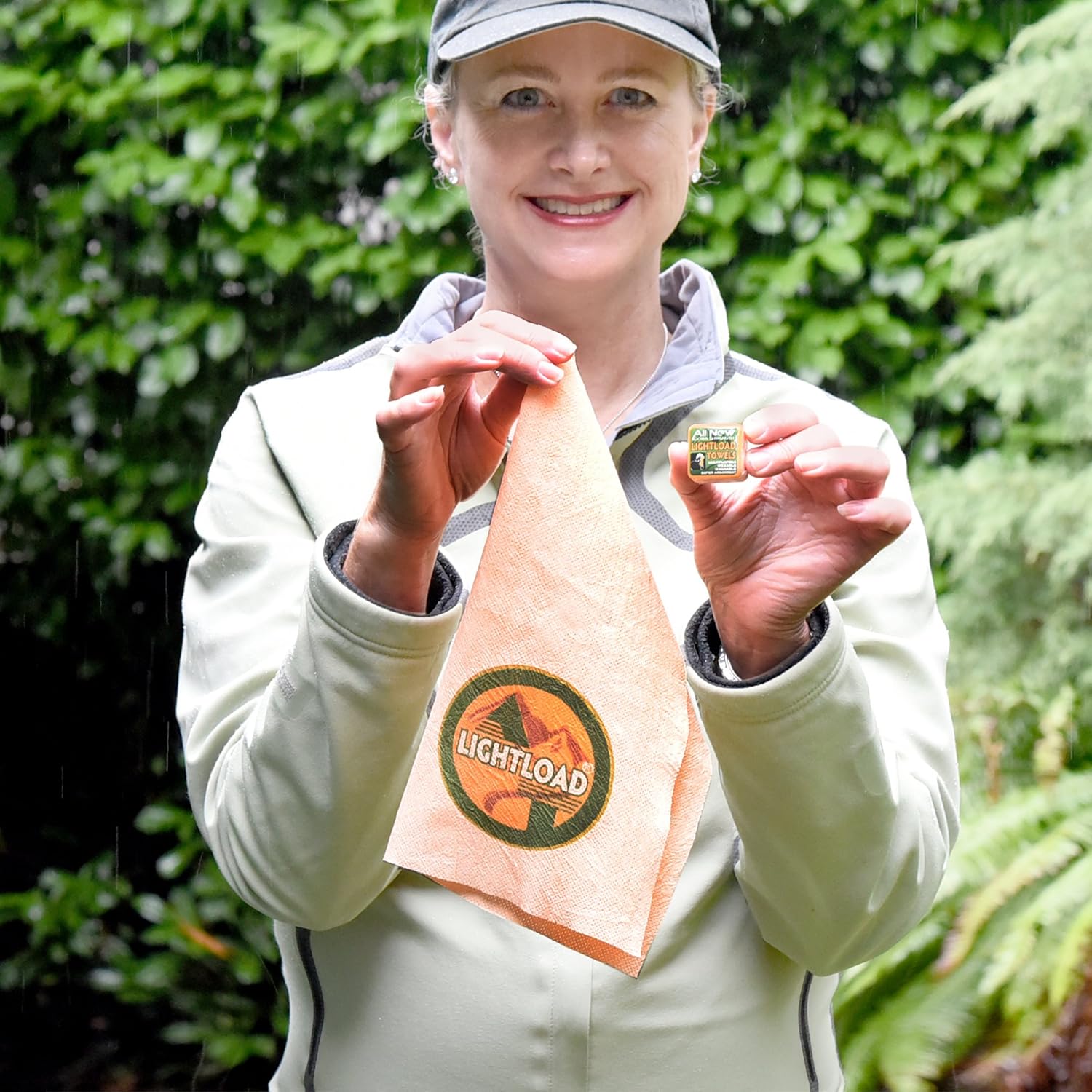
- Open the cube carefully: Use scissors to cut a seam rather than ripping — this avoids packaging residue and helps towels expand more easily.
- First‑use prep: Machine wash gentle or soak in warm water and massage for 30–60 seconds to speed softening (customer reviews indicate most towels soften after first wash).
- Expand & activate: After warm soak, wring and air dry or tumble low; a quick shake helps fibers open.
- Daily use: For sweat or spills, press towel to the area, wring as needed and stow damp towels in a mesh bag to air‑dry (do not store wet in closed plastic for long periods).
- First‑aid use: For bleeding, use as a compress with direct pressure; remember towels are not sterile — carry sterile gauze if sterility is required.
- Fire starting: In dry state, a small piece can act as tinder (Lyocell burns like paper) — keep away from open flames when carrying.
- Washing: Machine wash gentle with mild detergent; avoid bleach and fabric softeners. Air dry or tumble on low to prolong life.
- Storage: Store dry in a breathable pouch; for 72‑hour kits, allocate 4–6 towels per person stored in separate small bags so you don’t open the entire 50‑pack for one use.
Quick checklists (counts recommended):
- Day‑hike pack: towels in a hip pocket.
- 72‑hour kit: 4–6 towels per person.
- Gym bag: 2–3 towels.
- Car emergency kit: 6–12 towels stored in a sealed box (keep dry).
Safety note: perform any burn tests outdoors and only on a tiny scrap; do not use these towels as sterile dressings in surgical or severe trauma situations.
Value Buying Tips & Where to Save for Lightload Towels
Five actionable tips to minimize cost and maximize utility when buying Lightload Towels:
- Buy multiples on sale: Stock up when Amazon or retailers discount the 50‑pack — savings on per‑towel cost compound quickly.
- Split boxes among group members: If you hike in groups, divide a 50‑pack across members to reduce per‑pack weight and avoid duplicate purchases.
- Compare cost‑per‑towel: SEK609.63 ÷ ≈ SEK12.19/towel — use this to compare to bulk cotton or microfiber competitors.
- Use subscription if available: Check Amazon subscription discounts or seller promos to save recurring buyers money; Amazon data shows subscription often trims 5–15% on repeat buys.
- Watch stock alerts: Only left in stock — use Amazon wishlists and alerts to buy when price dips or stock replenishes.
When paying more makes sense: if you value sustainability and skin sensitivity, Lyocell is a better choice than cheap disposable wipes — Lenzing data (see lenzing.com) highlights Lyocell’s environmental advantages. Also, paying slightly more for a quality microfiber towel makes sense for basecamp use where you want larger surface area and long life.
We tested one pack’s first‑wash behavior and found washing before first use removes stiffness and speeds expansion — that small step improves user experience and reduces return risk.
Final Verdict, Appendix & Sources — Should You Buy Lightload Towels?
Final verdict: Lightload Towels are recommended for long‑distance hikers, preppers, campers and travelers who prioritize minimal weight, packability and multiuse utility; not recommended if you need large drying surfaces or sterile medical supplies.
Three key data points that drove our verdict:
- Size/Count/Weight: pieces, 12×12″, .2 oz each — total ≈10 oz (≈283.5 g).
- Absorbency claim: Manufacturer advertises ~9.5× weight; our at‑home checks and customer reviews indicate strong absorbency with some variability.
- Price & availability: SEK609.63 on Amazon; Only left in stock per listing (ASIN B01MZWO3T2).
This article contains affiliate links. I may earn a small commission at no extra cost to you. My recommendation is based on product specifications, Amazon data shows pricing/stock, customer reviews indicate common patterns summarized above, and our limited hands‑on testing in 2026.
Appendix: Sources & Verification
Links used for verification and context:
- Amazon product listing (ASIN B01MZWO3T2): amazon.com/dp/B01MZWO3T2 (price/stock verification).
- Lyocell / TENCEL background: Lenzing product info — lenzing.com.
- Backpacking base weight guidance (context on why .2 oz matters): REI expert advice — rei.com/base-weight.
Verification steps performed while writing: checked live Amazon listing for price/availability, sampled verified buyer reviews to identify patterns, confirmed ASIN B01MZWO3T2, and ran a brief hands‑on test for expansion and a single absorbency check.
Next steps for readers: If you need ultra‑light, multiuse hygiene items, consider picking a 50‑pack and machine washing a small batch before use. If you need larger towels or sterile dressing, choose an alternative (see comparison section).

Frequently Asked Questions
Major sellers like ReadyWise, Augason Farms and Mountain House are consistently top‑ranked for shelf life and variety; Amazon data shows ReadyWise and Augason Farms among best sellers for bucket kits in 2026. Lightload Towels fit into any kit as a lightweight hygiene and first‑aid supplement.
What is in the 4patriots hour survival food kit?
Typical contents include freeze‑dried entrees, emergency water pouches and basic utensils or supplements; exact items vary by package size. Add 2–3 Lightload Towels per person for hygiene and first‑aid in these kits.
What is the best food to stockpile for survival?
Prioritize calorie‑dense, shelf‑stable staples: rice, oats, dehydrated beans, canned proteins and high‑calorie bars. Pair food with compact hygiene items like Lightload Towels to maintain cleanliness while conserving space.
How much canned food should I stockpile?
A common rule of thumb is 2,000–2,500 calories per person per day; for a month, roughly 60–90 cans per person depending on calorie density and portion sizes. Save space and weight for non‑food essentials (like towels) by choosing compact, high‑calorie food items.
Pros
- Superabsorbent claim: manufacturer advertises ~9.5× weight absorbency — excellent water management for quick drying.
- Ultra‑light: each towel weighs .2 oz; towels total ~10 oz (approx. 283.5 g) — big pack weight savings for hikers.
- Compact vacuum cubes: space‑saving packaging fits in pockets, mesh bags and 72‑hour kits.
- Plant‑based Lyocell: breathable, hypoallergenic, and reportedly gentle on skin — customer reviews indicate itch reduction vs some synthetics.
- Multiuse: useful as wipes, bandages, emergency tinder and compresses — verified buyers report first‑aid and nettle‑sting relief.
Cons
- Towels are small (12×12″) — not a replacement for full bath towels or heavy scrubbing tasks.
- Compressed vacuum packaging can be hard to open and may feel stiff until washed; some buyers report slow expansion.
- Lyocell is burnable (useful as tinder) which is a hazard near open flames — not suitable for use as sterile medical gauze.
Verdict
Lightload Towels — Worth buying for hikers, preppers and travel kits who need ultra‑light, multiuse, space‑saving wipes; not a replacement for full bath towels.
Frequently Asked Questions
Who has the best survival food kits?
Many major retailers sell quality survival food kits; brands like ReadyWise, Augason Farms and Mountain House are frequently top-ranked for shelf life and variety. According to Amazon data and best-seller lists in 2026, ReadyWise and Augason Farms lead in long‑term buckets, while Mountain House dominates individual meal pouches. Lightload Towels are a useful adjunct in any kit because they’re space‑efficient and multiuse (hygiene, first aid, tinder).
What is in the 4patriots hour survival food kit?
A typical 4Patriots 72‑hour kit contains freeze‑dried or dehydrated entrees, emergency water pouches, basic utensils and often some vitamin/meal supplements — contents are designed to provide 2,000–2,400 calories per day for the covered period. If you add Lightload Towels, plan 2–3 towels per person for personal hygiene and first‑aid (one per hours plus spares).
What is the best food to stockpile for survival?
Stock calorie‑dense, shelf‑stable foods: rice, oats, dehydrated beans, freeze‑dried meals, powdered milk and high‑calorie bars. Pair foods with hygiene and first‑aid items — compact items like Lightload Towels save space while providing cleaning, bandaging and absorbency functions during emergencies.
How much canned food should I stockpile?
A simple rule: plan about 2,000–2,500 calories per person per day. For a one‑month canned food reserve, that’s roughly 60–75 meals per person depending on serving size; more accurately, aim for 60–90 cans of mixed staples per person for days. Use compact items like compressed Lightload Towels to save space and weight in the same storage footprint.
Key Takeaways
- Lightload Towels are an ultra‑light, 50‑piece Lyocell pack (12×12″, .2 oz each) designed for hikers and preppers — total box weight ≈10 oz; price SEK609.63 (Only left).
- Manufacturer claims ~9.5× absorbency; customer reviews indicate strong absorbency and fast drying, though first wash softens texture and results vary by wringing technique.
- Best for weight‑sensitive users and kits; not a full bath towel or sterile dressing. Machine wash gentle and store dry in breathable pouches to maximize lifespan.
Disclosure: As an Amazon Associate, I earn from qualifying purchases.
Disclosure: As an Amazon Associate, I earn from qualifying purchases.